
Cam Belt – Maintenance and Replacement
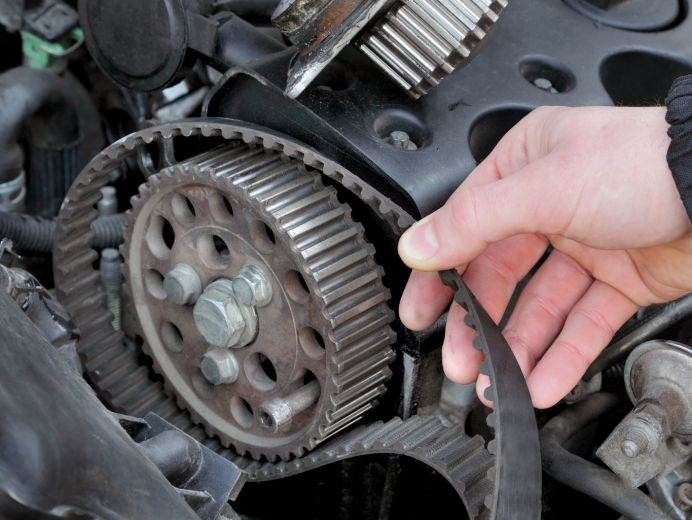
Picture the scene: it’s a damp Tuesday morning, and you’re crawling along the M25 between junctions 9 and 10. The traffic finally clears, you put your foot down to merge into lane three, and then—a sickening, flapping rattle followed by complete silence. The dashboard lights up like a Christmas tree, and you coast to a standstill on the hard shoulder. The AA patrolman takes one look under the bonnet and delivers the gut-wrenching diagnosis: the cam belt has snapped, and your pistons have just played a very expensive game of dominoes with your valves. This isn’t just a hypothetical horror story; it’s a scenario we see unfold across the UK every single week, and it’s almost always completely avoidable.
Cam Belt Replacement: When, Why, and How Much
Let’s not sugar-coat it: a cam belt replacement isn’t a quick oil change. It’s a labour-intensive job that requires a skilled technician to strip down the front of your engine, lock the crankshaft and camshafts in perfect time, and fit a new tensioner and idler pulleys. On a modern transverse engine, access is often tight, and the job can easily take three to five hours. This is why you should never trust a quote that seems suspiciously cheap; corners cut during this procedure will lead to a catastrophic failure.
For a typical family hatchback in the UK, you’re looking at a cost ranging from £350 to £600 depending on your region and the complexity of the engine. London and South East prices tend to sit at the higher end of that scale due to labour rates. The kit itself is relatively inexpensive—usually between £80 and £150 for a quality brand like Gates or Continental—but the bulk of the cost is the skilled labour. On engines like the Ford EcoBoost and Vauxhall Ecotec, we strongly advise replacing the water pump simultaneously because it’s driven by the cam belt; if the pump seizes a month after your belt change, it will strip the teeth off your brand-new belt, and you’re back to square one with a wrecked engine.
Signs Your Cam Belt Is About to Fail
Unlike a worn brake pad, a dying cam belt rarely gives you much audible warning, which is precisely why sticking to the schedule is vital. However, if you’re vigilant, you might spot the clues. A rhythmic ticking or slapping sound from the plastic covers behind the auxiliary belt could indicate the belt is fraying and striking the casing. If you experience a sudden loss of power or a rough, misfiring idle, the belt may have already jumped a tooth, throwing the valve timing out of sync. Visible cracking on the ribbed side of the rubber, or a glazed, shiny appearance on the smooth side, are also tell-tale signs of a belt crying out for retirement.
Why We Always Recommend Replacing the Water Pump Together
We touched on this earlier, but it bears repeating because it’s the most common false economy we see. On the vast majority of engines—particularly the Ford 1.0 and 1.6 EcoBoost, Vauxhall’s 1.4 and 1.6 Ecotec, and the PSA PureTech units—the water pump is buried deep inside the timing case. To change the pump separately, you have to repeat 90% of the labour you just paid for. A quality water pump adds roughly £40 to £80 to the parts bill, which is a drop in the ocean compared to the £400+ labour bill you’d face doing the job twice.
UK Garage vs Main Dealer: Price Comparison
There’s a common misconception that you must use a main dealer to protect your warranty, but the Block Exemption Regulation allows you to use any VAT-registered garage using Original Equipment (OE) quality parts. A main dealer will typically quote between £700 and £1,100 for a cam belt and water pump replacement. An independent specialist, on the other hand, offers the same job for £350 to £550. The Halfords Autocentre network, for instance, offers fixed-price cambelt replacement packages across the United Kingdom that often undercut the franchised dealers significantly while still providing a nationwide warranty. The key is ensuring the garage locks the engine using the correct timing tools, not just tippex marks.
Timing Belt Interval: Decoding Manufacturer Schedules
Interpreting a manufacturer’s service schedule can feel like reading a cryptic legal document. One brand states 10 years or 150,000 miles, while another insists on 5 years or 60,000 miles. Getting this wrong because you assumed your car was a “long-life” interval model is a fast track to the scrapyard. We always tell our customers to think of the interval as a “whichever comes first” countdown, and we generally advise erring on the side of caution, especially if you do a lot of urban driving.
Mileage vs. Age: Which Comes First?
Rubber degrades over time regardless of whether the wheels are turning. A 10-year-old car with only 30,000 miles on the clock is a ticking time bomb if the belt has never been changed. The rubber compound dries out, loses its plasticity, and becomes brittle. We’ve seen low-mileage “granny cars” snap a belt on the first long motorway run in a decade. The recommended interval for a Vauxhall Corsa cam belt, for example, is often 6 years or 72,000 miles, whichever comes first. If your Corsa is a 2018 plate, you’re already overdue, even if you’ve only done 40,000 miles.
Why Some Brands Have Revised Their Intervals
You might notice a sticker in your engine bay contradicting the original service book. This isn’t a scam; it’s a manufacturer admission of over-optimism. The most famous example is the Ford 1.0 EcoBoost interval, which was initially marketed with a very long lifespan. After a spate of wet belt failures, Ford revised the interval down, with many now requiring replacement at 10 years or 100,000 miles—and even that is considered risky by many independent specialists who prefer seeing them done at 8 years. Material technology improves, but real-world driving conditions often force a reality check.
The Danger of ‘Sealed for Life’ Misconceptions
The phrase “sealed for life” is perhaps the most misleading term in the automotive industry. When a manufacturer says “life,” they mean the theoretical lifespan of the component until it fails—not your natural life, or even the car’s usable life. There is no such thing as a lifetime lubricant or a lifetime chain. Oil degrades, plastic chain guides become brittle, and metal stretches. Ignoring a component because a marketing department labelled it maintenance-free is a gamble we’d rather you didn’t take.
Belt vs Chain: The Great Engine Debate
Walk into a showroom, and a salesperson will proudly tell you the new model has a timing chain, implying it’s a “fit and forget” solution. For a while, manufacturers like BMW and Mercedes shifted back to chains to reduce service costs for fleet buyers. However, the garage reality has been a sobering lesson in “better the devil you know.” Chains are not the bulletproof solution they were cracked up to be, and the repair bills when they go wrong make a cam belt replacement look like pocket change.
Why We Still Prefer a Belt in Older Vehicles
In an older, non-interference engine or a simple 8-valve unit, a belt is a predictable service item. It’s quiet, it doesn’t stretch, and the replacement cost is fixed and known. When a chain stretches, it often requires the engine to be removed or the gearbox to be dropped to access the rear timing case. For a vehicle worth £2,000, a £1,500 chain replacement is an economic write-off, whereas a £400 belt change keeps the car on the road for another five years. We like the predictability; you change it, you forget about it for the next interval.
The BMW N47 Nightmare: Chains Aren’t Bulletproof
We can’t discuss timing chains without addressing the elephant in the room—or rather, the broken rattle under the bonnet. BMW N47 timing chain failures remain one of the most common catastrophic engine faults seen by British garages. The issue, widely documented on the 2.0-litre diesel units found in the 1, 3, and 5 Series, involves the lower chain stretching and the tensioner failing. Because BMW, in their infinite wisdom, placed the chain at the back of the engine (gearbox side), the repair bill often exceeds £2,500. We’ve consoled too many owners who bought a used diesel BMW thinking they were avoiding a belt change, only to face a repair bill that wrote off the car.
Wet Belt Systems: The Ford EcoBoost Disaster
Just when you thought the debate was settled, engineers threw a curveball: the “wet belt.” This system runs the belt inside the engine sump, bathing it in oil. In theory, this reduces friction and emissions. In practice, Ford 1.0 EcoBoost ‘wet belt’ degradation issues are a leading cause of engine failure in the UK. Over time, the oil attacks the rubber, causing the belt to swell and delaminate. Fragments of rubber clog the oil pickup pipe, starving the engine of oil pressure. If you own a 1.0 EcoBoost, ignoring the revised interval isn’t just risky; it’s a near-certainty of total engine destruction.
Cam Belt Maintenance for the British Climate
Manufacturer intervals are often set based on global averages, but a car living in the UK faces a unique set of environmental challenges. We’re an island with damp air, salty coastal winds, and a culture of short, stop-start journeys. These factors don’t just stain your driveway green; they actively accelerate the chemical breakdown of the rubber polymers in your cam belt.
How UK Weather Conditions Shorten Belt Life
Rubber is hygroscopic—it absorbs moisture. The constant dampness of a typical British winter, combined with the extreme heat cycling of an engine bay, causes the belt to expand and contract minutely. In coastal regions, the salt-laden air adds a corrosive element that can stiffen the belt’s backing. We’ve noticed that cars kept in Brighton or Cornwall often exhibit more surface cracking on auxiliary and timing belts at the five-year mark than identical models kept in a dry inland garage. The belt doesn’t need to snap immediately; micro-cracking is the gateway to a sudden, catastrophic separation.
Storage and Low-Mileage Vehicle Risks
Leaving a car parked for months on end is often worse than driving it daily. When an engine sits idle, the section of the belt wrapped around the tensioner and camshaft pulleys remains under constant stress in a fixed position. This creates a “memory” in the rubber, stiffening the teeth and making them prone to shearing off when the engine finally cranks over. If you’re storing a classic or a summer convertible over winter, we recommend turning the engine over by hand periodically, or simply budgeting for a belt replacement based purely on age, not mileage.
Visual Checks You Can Do on a Sunday Morning
You don’t need to be a mechanic to spot danger signs. Here’s a quick checklist we recommend:
- Pop the top cover: If you can unclip the upper cam belt cover without major disassembly, shine a torch inside.
- Look for cracks: Run your finger (gently) along the smooth side. If it feels like dry skin, it’s perishing.
- Check for contamination: An oil leak from a camshaft seal will soak the belt, rapidly softening the rubber and leading to tooth separation.
- Listen for the ‘chirp’: A high-pitched chirping sound that rises with revs often points to a failing tensioner bearing.
At cambelt.co, we believe proactive replacement is always cheaper than an engine rebuild. A snapped belt doesn’t just ruin your day; it often writes off a perfectly good car, turning a £500 service into a £3,000 engine swap or a trip to the breakers yard. Don’t gamble with a rubber band that holds your engine’s life in its hands. Check your service book right now, look at the interval, and if you’re even a month over, give us a call. The hard shoulder of the M25 is no place to be making financial decisions.
Frequently Asked Questions
What happens if my cam belt snaps while driving?
On an interference engine (which covers the vast majority of modern cars), the pistons will strike the valves that have stopped moving. This usually results in bent valves, damaged pistons, and often a cracked cylinder head. The engine will stop immediately, and the repair bill will often exceed the value of the vehicle if it’s more than a few years old.
Is a timing chain really maintenance-free?
Absolutely not. While the chain itself is metal, it relies on plastic guides and a hydraulic tensioner that wear out over time. Oil changes are critical for chain longevity. We’ve seen countless timing chains fail because the car missed an oil change, causing the tensioner to clog and the chain to rattle and eventually jump.
Can I just change the belt and not the water pump?
We strongly advise against it. The labour cost to access the water pump is the same as the cam belt job. Saving £60 on a water pump now could cost you £400 in labour later, plus the risk of the old pump seizing and snapping your fresh belt. It’s a false economy we refuse to entertain.
How do I know if my Ford EcoBoost has a wet belt?
The 1.0-litre, three-cylinder EcoBoost petrol engine (award-winning as it was) uses the wet belt system. If you own a Fiesta, Focus, B-Max, or EcoSport with this engine, it is critical you adhere to the revised schedule. We recommend an oil flush and belt inspection at the very minimum to check for rubber contamination in the sump.