Cam Belt Kits: Why Your Engine Deserves the Full Package
We had a Vauxhall Astra roll into the workshop on a recovery truck last winter. The owner was gutted. He’d paid a mobile mechanic to swap “just the belt” six months prior to save about eighty quid. The belt itself was still intact, but the factory tensioner bearing had collapsed at 60mph, causing the belt to jump four teeth and introduce the valves to the pistons. That engine was scrap, and the total bill ended up being ten times what a proper kit replacement would have cost. That’s precisely why our team insists on a complete kit every single time—no exceptions, no shortcuts.
Beyond the Rubber: The Core Components of a Proper Kit
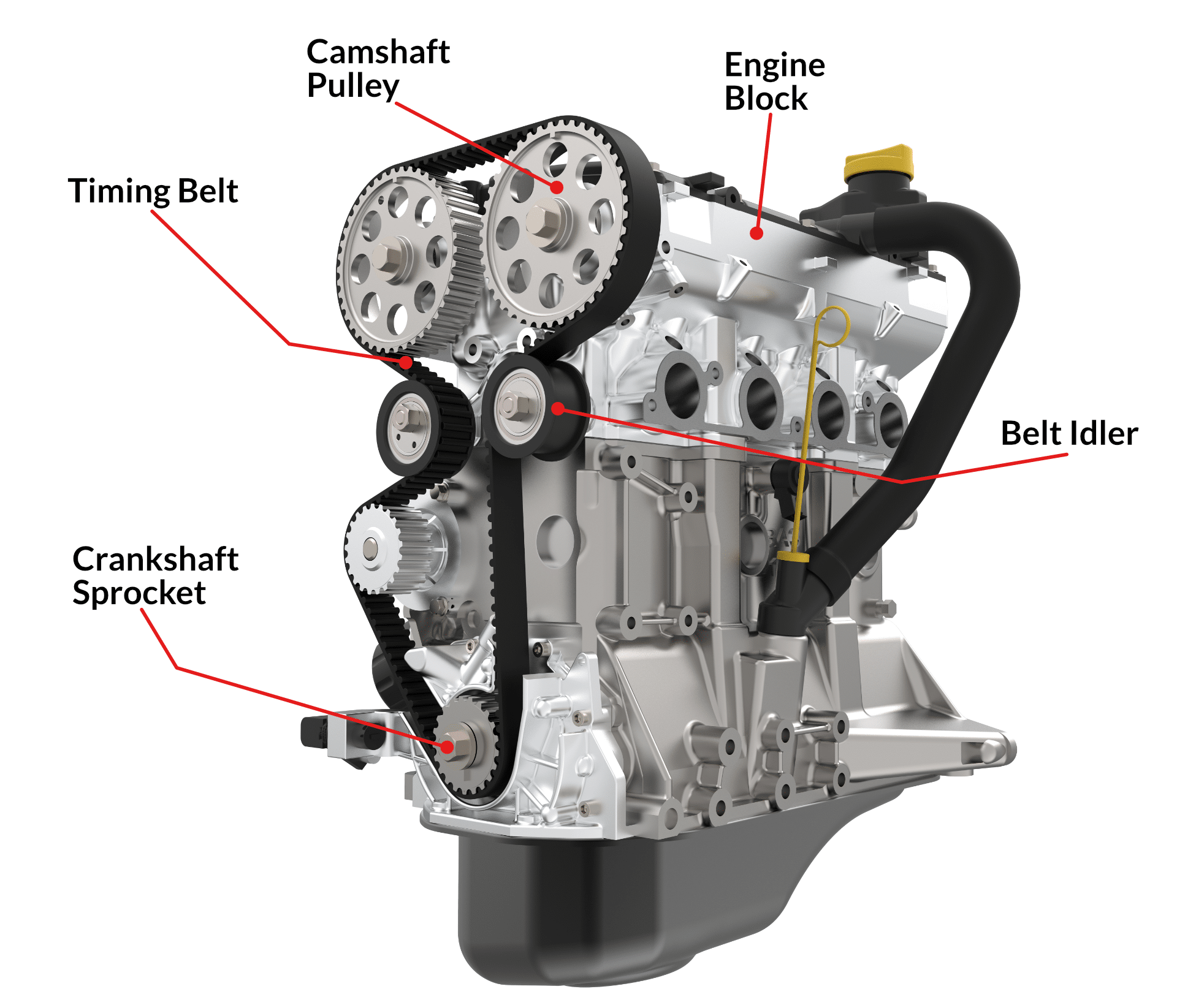
A cam belt kit isn’t just a loop of reinforced rubber in a fancy box. When you order a premium kit from manufacturers like Dayco or Gates, you’re getting a meticulously engineered system designed to run silently for the full timing belt interval. We refuse to fit a belt without the supporting cast, because the rubber is rarely the first component to fail.
The Reinforced Belt: Not Just Any Rubber Strip
The modern belt is a high-tech composite. We’re talking glass-fibre tensile cords, a tough HNBR (hydrogenated nitrile butadiene rubber) compound, and a tooth profile precision-ground to mesh perfectly with the pulleys. A Gates PowerGrip kit, for example, uses a specific tooth geometry that reduces noise while increasing load capacity. The belt is the star of the show, but it can’t perform without a supporting crew.
Tensioners & Idlers: The Bearings That Take the Strain
This is where the real danger of a “belt-only” job hides. The tensioner applies constant, calculated pressure to stop the belt flapping at high RPM. Inside that tensioner is a sealed bearing packed with high-temperature grease. Over 60,000 to 100,000 miles, that grease degrades. We’ve seen idler pulleys seize solid while the belt itself looked brand new. A quality Dayco kit includes a new eccentric tensioner and smooth idlers, ensuring the rotational drag is consistent and the belt tracks true.
Studs, Bolts, and Fittings: The Single-Use Fixings You Can’t Reuse
Many modern engines use torque-to-yield (TTY) fasteners on the tensioner and idler mounts. These bolts are designed to stretch once. If you reuse them, you risk them snapping under vibration or failing to maintain the correct clamping force. A complete kit includes these single-use fixings, eliminating the temptation to chuck the old bolt back in with a dab of threadlock. We’ve extracted too many snapped tensioner studs from cylinder heads to ever take that risk again.
The Water Pump Question: Why We Always Recommend Replacing It Together
On a huge number of engines found across UK roads, the water pump is driven directly by the timing belt. This means the pump is buried under the same covers and engine mounts as the belt itself. The mechanical logic is simple: if the pump seizes or starts leaking within the next 20,000 miles, you’re paying for the entire job all over again.
Friction-Driven Pumps vs. External Pumps: Know Your Layout
If your engine has a friction-driven pump (where the smooth back of the belt spins the pump pulley), replacing the pump is non-negotiable. We see this predominantly on VAG group engines like the 1.9 and 2.0 TDI PD and CR units, along with many Ford Duratec petrols. The plastic impellers on original VAG group water pumps are notorious for cracking or spinning loose on the shaft, leading to sudden overheating. An external pump, driven by the auxiliary serpentine belt, is less critical to replace simultaneously, but we still advise checking it for play.
Labour Costs: Paying Twice for the Same Strip-Down
Swapping a water pump during a timing belt interval adds roughly the cost of the part, because the labour is already covered. You’ve already removed the engine mount, the covers, and the old belt. Skipping the pump to save £50 and then paying a garage £350 in labour six months later to strip it all down again is a false economy we see far too often. We’d rather you spend that money on a weekend away than on duplicate garage bills.
Seals, Gaskets, and the ‘While You’re in There’ Consumables
A cam belt lives in a hostile environment. It’s sealed behind plastic covers, but it’s still adjacent to hot oil and pressurised coolant. A leak from a tired gasket or seal can quickly degrade a new belt, turning your investment into a ticking time bomb.
Front Main Seals: Stopping Oil Contamination at the Source
The crankshaft front seal and camshaft seals are right next to the belt sprockets. On a Ford EcoBoost engine, the wet-belt design means the belt runs inside the engine oil, but on dry-belt engines, oil contamination is catastrophic. A leaking seal on a Vauxhall CDTi or a PSA HDi engine will spray hot oil onto the belt. Rubber soaked in oil swells, softens, and loses its tensile strength. We always inspect the seals and strongly recommend replacing them as part of the kit, as the incremental cost is tiny compared to the damage a leak causes.
Coolant ‘O’ Rings and the Silent Leaks That Kill Bearings
When we replace a water pump, we also replace the coolant ‘O’ ring or gasket that seals it to the block. A hardened, flattened ‘O’ ring might seal for a week before weeping coolant. That coolant drips down onto the belt and the idler bearings, washing away the grease and causing corrosion. It’s a silent killer. A quality kit often includes these small rubber seals, and if it doesn’t, we source them before starting the job.
Comparing Aftermarket Giants: What We Look for in a Premium Kit
We don’t just grab any box off the shelf. We have strong opinions on the kits we fit to our customers’ cars, because our reputation depends on that kit lasting the full timing belt interval—whether that’s 4 years or 100,000 miles.
Gates vs. Dayco: The Battle of the OEM Suppliers
Both Gates and Dayco are original equipment suppliers to major manufacturers. A Gates PowerGrip kit is our go-to for many applications because of the consistency of their belt compound and the clarity of their installation instructions. Dayco timing belts are equally robust, and we often find their kit contents slightly more generous, sometimes including the crank bolt where Gates doesn’t. In terms of longevity, there’s nothing between them; we choose based on the specific engine and kit contents for that registration.
SKF and INA: When the Bearing Brand Makes the Kit
Sometimes the belt is manufactured by one company, but the tensioner and idlers come from a bearing specialist. INA (part of the Schaeffler Group) makes the hydraulic tensioners and pulley bearings found in many OEM kits. SKF kits are superb when it comes to bearing quality, using their own high-speed, low-friction bearings. On an engine known for tensioner whine, we might lean towards an SKF kit over a pure belt brand, simply because the bearing is the critical stress point.
Belt vs Chain: Why a Kit Philosophy Still Applies
There’s a common misconception in the “belt vs chain” debate that a chain-driven engine is maintenance-free. We’re here to tell you that’s a dangerous myth. The kit philosophy applies just as aggressively to chain drives.
The Myth of the ‘Lifetime’ Chain
No oil is lifetime, and no timing chain is lifetime. Chains stretch. The pins and links wear microscopically with every revolution, and over 100,000 miles, that wear adds up to a chain that’s too long for the sprockets. We’ve seen BMW N47 timing chain tensioner problems destroy engines before 80,000 miles. The chain itself rarely snaps; it jumps teeth because it’s stretched beyond the tensioner’s ability to take up the slack. When we replace a chain, we fit a full kit: chains, sprockets, guides, and the hydraulic tensioner.
Tensioner Failure: The Real Culprit Behind Chain Rattle
That death rattle on a cold start isn’t the chain; it’s the tensioner failing to pressurise. The BMW N47 engine relies on oil pressure to tension the chain, and if the tensioner bleeds down overnight, the chain slaps against the guide rail until pressure builds. A full timing chain kit replaces the tensioner with an updated design, often solving the rattle before the chain stretches enough to cause terminal damage. Treating a chain like a belt—replacing the whole system—is the only way to guarantee reliability.
Why a ‘Belt-Only’ Job Is a False Economy We Refuse to Entertain
We’ve turned away work from drivers who insist we just “slap a belt on it.” It’s not arrogance; it’s a refusal to be complicit in an impending engine failure. The financial argument for a complete kit is overwhelming.
The Cost of a Second Strip-Down in a UK Workshop
Let’s look at the numbers. The average independent garage labour rate in the UK hovers around £60 to £90 per hour. A timing belt job on a typical family hatchback is a 3 to 4-hour booking. That’s between £180 and £360 in labour alone. A Dayco timing belt kit might cost £120, while a belt alone is £40. Saving £80 on the parts and then paying £300 in labour to fix a failed tensioner a year later is a net loss of £220, plus the cost of a tow truck and the stress of a roadside breakdown. The maths doesn’t lie.
Warranty Voiding: What the Small Print Actually Says
Every reputable parts manufacturer warrants their belt for the specified interval only if fitted as part of a complete kit with new tensioners. If a belt fails and the warranty claim investigation reveals the original tensioner was reused, the claim is rejected. We’ve seen it happen. We will only issue our own workmanship warranty when a full kit is fitted, because we stand behind the repair and need to know the entire system is fresh.
A cam belt replacement isn’t a quick fix; it’s an investment in peace of mind for the next four or five years of motoring. The belt is the cheapest part of the equation, and the labour is the most expensive. By insisting on a complete kit—belt, tensioners, idlers, water pump, and seals—we’re guaranteeing that you reach the full timing belt interval without a catastrophic failure. That’s not upselling; that’s doing the job properly.
Frequently Asked Questions
Why can’t I just replace the cam belt and keep the old tensioner?
The tensioner bearing has the same service life as the belt. If it fails, the belt loses tension instantly, causing the teeth to jump. The cost of a new tensioner is a fraction of the labour to strip the engine down again, so reusing the old one is a gamble we refuse to take.
Is a Gates PowerGrip kit better than a Dayco timing belt kit?
They are both OEM-quality and we fit both with complete confidence. The choice often comes down to the specific engine code. For some applications, the Gates kit includes slightly better instructions, while Dayco timing belts sometimes come with a more comprehensive set of fixings. We select whichever kit offers the most complete solution for your vehicle.
Do all VAG group engines need a water pump with the cam belt?
Almost all of them do. The majority of VAG group water pump failures we see are on 1.9 and 2.0 TDI engines, where the pump is driven by the timing belt. The plastic impeller can crack or detach, leading to sudden coolant loss and overheating. We always replace the pump as part of the timing belt interval on these engines.
My car has a timing chain, so I don’t need to worry about replacement, right?
Unfortunately, no. We’ve replaced numerous chains on engines like the BMW N47, where timing chain tensioner problems lead to a rattling noise and eventual failure. Chains stretch, and tensioners wear out. A chain-driven engine still requires a full kit replacement when problems arise.
What happens if oil leaks onto my new cam belt?
Oil contamination is a death sentence for a rubber timing belt. It causes the rubber compound to swell and soften, leading to tooth shear or belt snap. This is a common issue on Ford EcoBoost wet-belt engines if the oil isn’t changed regularly, but it also happens on dry-belt engines with leaking camshaft or crankshaft seals. That’s why we always replace those seals as part of the job.