Interference vs Non-Interference Engines: Why It Matters for Your Cam Belt
You’re cruising along the M62 when a faint, rhythmic slapping noise starts echoing from under the bonnet. Your stomach knots instantly. Is it the cam belt? And more terrifyingly, is this the sound of your engine tearing itself apart? That moment of dread isn’t just about the inconvenience of a breakdown; it hinges entirely on a design choice made by engineers years ago. Whether your engine is an interference or non-interference type dictates if you’re facing a simple recovery or a financial write-off. Understanding this mechanical distinction isn’t just for petrolheads—it’s the difference between a £400 routine fix and a £2,500 catastrophic failure.
Defining the Battle: What Is an Interference Engine?
In the simplest terms, an interference engine is a high-stakes game of mechanical chicken. It’s a design where the valves and pistons occupy the same physical space within the cylinder, but crucially, they do so at different times. The cam belt acts as the strict conductor, ensuring the valves are safely shut and out of the way before the piston comes hurtling up to top dead centre. If the timing is lost, these components collide with brutal force. High-compression designs from manufacturers like BMW and Honda rely heavily on this layout to squeeze out more power and better fuel economy, making the valves open wider and for longer, right into the path of the piston.
The Role of the Timing Belt in Keeping the Peace
We often describe the timing belt as the silent diplomat of the engine bay. It synchronises the rotation of the crankshaft (controlling the pistons) and the camshaft (controlling the valves). As long as this reinforced rubber band maintains perfect tension and its teeth grip the pulleys precisely, peace reigns. The piston reaches its peak, the valve is retracted, and combustion pushes them apart. But that rubber degrades. Heat cycles, oil contamination, and simple age weaken the belt’s internal cords. When it strips teeth or snaps entirely, the diplomacy ends, and the crankshaft keeps spinning under momentum while the camshaft freezes, leaving valves hanging open like sitting ducks.
Visualising the Cylinder Head: Pistons vs Valves
Imagine a crowded lift where the doors (valves) must close before the floor (piston) rises. In an interference engine, the ceiling is low. If the doors stop halfway, the rising floor smashes into them. That’s exactly what happens inside your cylinder head. The piston, usually made of aluminium alloy, strikes the hardened steel valve stems with enough force to bend them into a banana shape. Because the piston keeps moving, it often punches the shattered valve head back up into the cylinder head, destroying spark plugs and scoring the cylinder walls in the process.
The Safer Bet: How Non-Interference Engines Work
Non-interference engines are the mechanical equivalent of a safety net. In these ‘free-wheeling’ designs, when the piston reaches top dead centre, the valves are never physically deep enough in the cylinder to touch it, even if they are fully extended. If the timing belt snaps at 70mph, the valves freeze, the pistons keep moving, but they simply pass each other without contact. The engine stops dead, and you coast to the hard shoulder. Historically, this robust layout was common in older Ford Duratec units and classic British Leyland engines, which prioritised durability over squeezing out every last drop of horsepower.
Why Modern Efficiency Has Phased Out Free-Wheeling Designs
You might wonder why every car doesn’t use this safer design. The answer lies in the relentless pursuit of emissions targets and fuel economy. To achieve higher compression ratios and better airflow, modern cylinder heads need larger valves that open deeper into the combustion chamber. By allowing the valves to intrude into the piston’s swept volume, engineers can optimise the burn. This is why many older Volvo modular engines (red block) were famously non-interference, but modern Volvo VEA engines are interference. The efficiency gains are simply too significant to ignore, leaving the timing belt as the single critical point of failure.
The Catastrophic Cost of Getting It Wrong
We’ve seen the aftermath of these failures in our workshop, and it’s never pretty. The financial gap between prevention and repair is staggering. The UK average cam belt replacement cost ranges from £350 to £600 depending on the region and vehicle make. Now, contrast that with the repair bill for a valve crash. A snapped cam belt on a Vauxhall Corsa 1.2 interference engine can instantly cause over £2,000 in damage at a UK garage. That’s a bill that often exceeds the value of an older car, turning a reliable runabout into a scrapper overnight.
Bent Valves, Cracked Pistons, and Complete Engine Failure
The mechanics of the destruction are violent. The piston doesn’t just gently nudge the valve; it hammers it. You’ll typically see eight or sixteen bent valves, shattered valve guides, and a cracked piston crown. In severe cases, the piston rod can punch right through the side of the engine block, leaving a fist-sized hole and a puddle of oil on the tarmac. Even if the block survives, fragments of metal often get sucked back up into the intake manifold, contaminating other cylinders. It’s not a repair; it’s a forensic rebuild.
Labour Rates at UK Garages: Why Prevention Is Cheaper
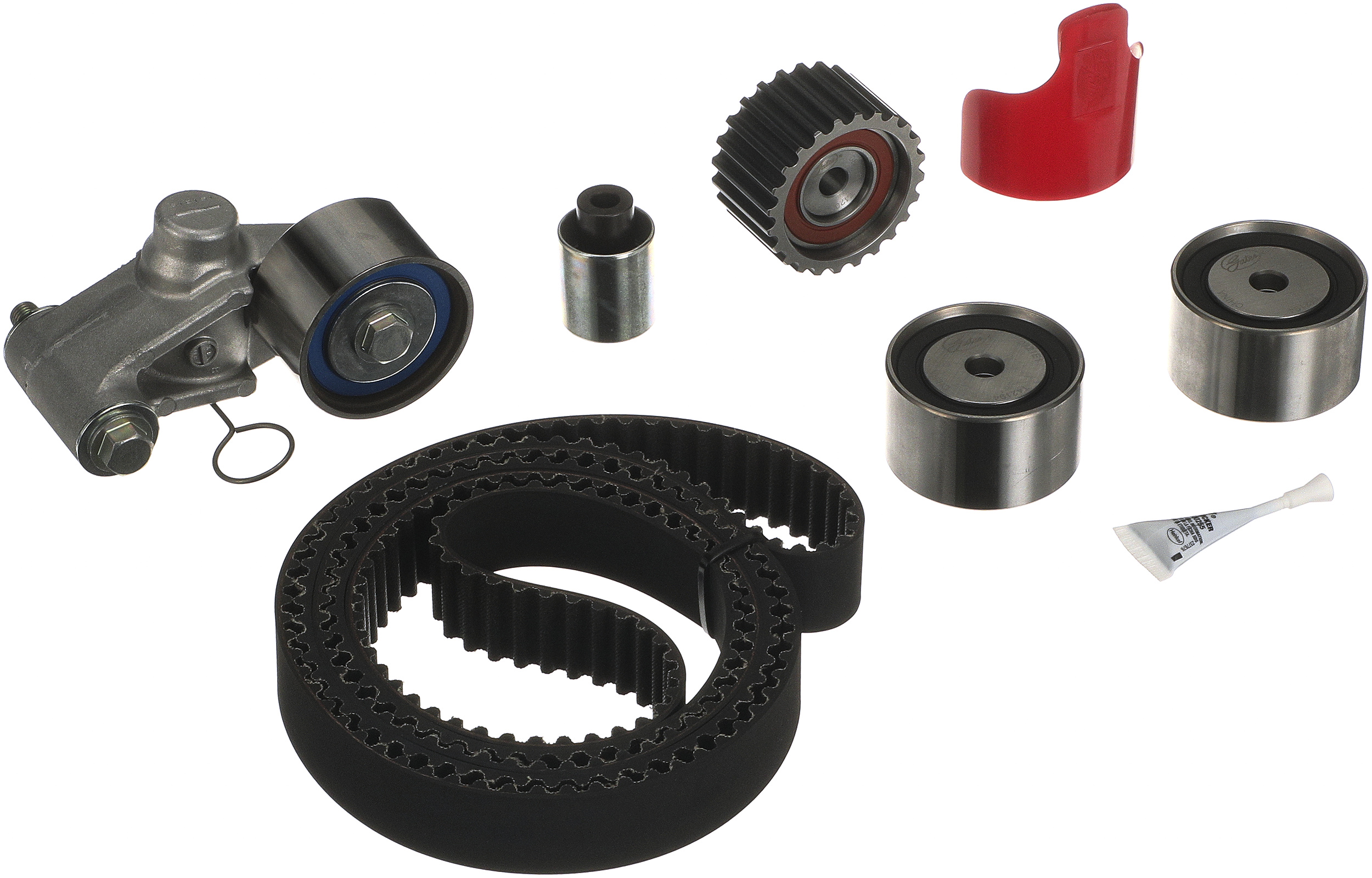
Let’s talk numbers for a typical family hatchback. A timing belt kit, including a water pump, tensioner, and labour, usually takes a skilled mechanic around 3 to 4 hours. At an average UK independent garage rate of £60-£80 per hour, the maths is sensible. A cylinder head rebuild, however, requires the engine to be stripped, the head sent to a machine shop for pressure testing, and days of reassembly. Labour alone can easily hit 15 hours. We always advise customers that a cam belt replacement isn’t an expense; it’s the cheapest insurance policy you’ll ever buy against a four-figure sum.
Belt vs Chain: Which Side Are Your Valves On?
The old belt vs chain debate often gives drivers a false sense of security. Many people think a timing chain makes them immune to this disaster. That’s dangerously wrong. The destruction depends purely on the engine’s interference status, not the material connecting the cogs. A metal chain might last longer than a rubber belt, but if the tensioner fails or the chain stretches and jumps a tooth on an interference engine, the result is identical. The valves and pistons don’t care if a rubber band or a metal link caused the timing slip—they just collide.
The Myth of the ‘Lifetime’ Timing Chain
We’ve had to break bad news to many owners who believed their chain was fit for the life of the car. The BMW N47 timing chain issue highlighted that chain-driven interference engines suffer catastrophic failure when service intervals are ignored. The chain stretches, the plastic guides become brittle, and eventually, the engine jumps timing. The VW Group TSI engines are another prime example; a snapped chain in one of those is just as destructive as a snapped belt, often writing off the vehicle due to the sheer cost of a replacement engine. There is no ‘lifetime’ component in an interference engine, only a service item waiting to fail.
How to Check Your Engine Type Before the Service Interval
Knowing your enemy is half the battle. You don’t need to be a mechanic to find out if your engine is a ticking time bomb. The internet is your best friend here. Start by popping the bonnet and finding the engine code sticker, usually on the timing cover or the bulkhead. Alternatively, grab your V5C logbook; the engine number prefix is a direct key to your engine’s design. If you’re driving a common UK model, like a Ford Fiesta or a Vauxhall Astra, the information is widely documented in owner forums, but you must verify it rather than guess.
Using Your Registration Number to Decode the Risk
The quickest method for a definitive answer is to pick up the phone. Call a local garage or a main dealer, give them your registration number, and ask the blunt question: “Is my engine an interference type?” The Ford 1.0-litre EcoBoost engine, common in the Fiesta and Focus, is a ‘wet-belt’ interference design requiring strict interval adherence. A quick check using the number plate confirms this instantly, allowing you to book the service without delay. Don’t rely on generic advice; always check your specific variant.
Why the Manufacturer’s Timing Belt Interval Is Non-Negotiable
We often hear customers say they’ll push the service a few thousand miles over the limit. With an interference engine, this is a game of Russian roulette. Manufacturers set the timing belt interval based on rigorous testing of rubber degradation, not just mileage but time. A belt that sits for five years in a cold, damp UK climate can be just as perished as one that’s done 60,000 miles. Ignoring the “X years or Y miles—whichever comes first” rule is the single most common cause of preventable engine death we see.
Our Team’s Verdict: Don’t Gamble with a Rubber Band
After decades of seeing the carnage, our team has adopted a zero-tolerance policy toward guesswork. UK driving conditions are brutal on engines, with constant stop-start traffic, short cold journeys, and temperature swings. We believe treating every engine as an interference engine is the safest financial strategy, regardless of the official design. Even if you own a rare non-interference motor, a snapped belt still leaves you stranded on the M25 in the rain, facing a recovery bill and a major inconvenience. The peace of mind that comes with a fresh belt, tensioner, and water pump is worth every penny.
Ignorance of your engine type isn’t bliss; it’s a financial time bomb ticking under your bonnet. Whether you’re driving a high-performance BMW or a humble city car, the distinction between interference and non-interference dictates whether a snap means a tow home or a trip to the scrapyard. Don’t wait for that rattling noise. Open your service history, check your V5C, or give us a ring with your registration number. The cost of a cam belt replacement is a known, manageable figure—the cost of a broken one is a gamble you don’t want to take.
Frequently Asked Questions
How do I know if my engine is interference or non-interference?
The most reliable method is to check your vehicle’s specific engine code, usually found on the V5C logbook or a sticker under the bonnet. You can then cross-reference this code with manufacturer data or simply call a reputable garage with your registration number. We can instantly tell you if your specific Ford, Vauxhall, or Volkswagen is at risk.
Can a timing chain engine still suffer interference damage?
Absolutely. The term ‘interference’ refers only to the physical space between the pistons and valves. Whether a belt or a chain drives the camshaft, if the synchronisation fails on an interference engine, the internal collision will be catastrophic. Chains stretch and tensioners fail, leading to the same bent valves and cracked pistons as a snapped belt.
What is the average cost of a cam belt replacement in the UK?
The UK average cam belt replacement cost ranges from £350 to £600. This varies based on your location, the make of your vehicle, and whether you replace the water pump and tensioners at the same time. It’s a substantial saving compared to the £2,000+ repair bill resulting from a snapped belt on an interference engine.
Is the Ford EcoBoost engine an interference design?
Yes. The 1.0-litre Ford EcoBoost engine, found in the Fiesta and Focus, is an interference design. It also uses a ‘wet-belt’ system that runs inside the engine oil, making strict adherence to the manufacturer’s service interval absolutely critical to prevent premature degradation and engine failure.
Why are most modern engines interference types?
Modern engines are designed for maximum fuel efficiency and lower emissions. To achieve this, engineers design the valves to open deeper into the cylinder, creating a better air-fuel mixture burn. This high-compression design physically requires the valves to occupy the same area as the piston at different times, making the timing belt’s job critical.